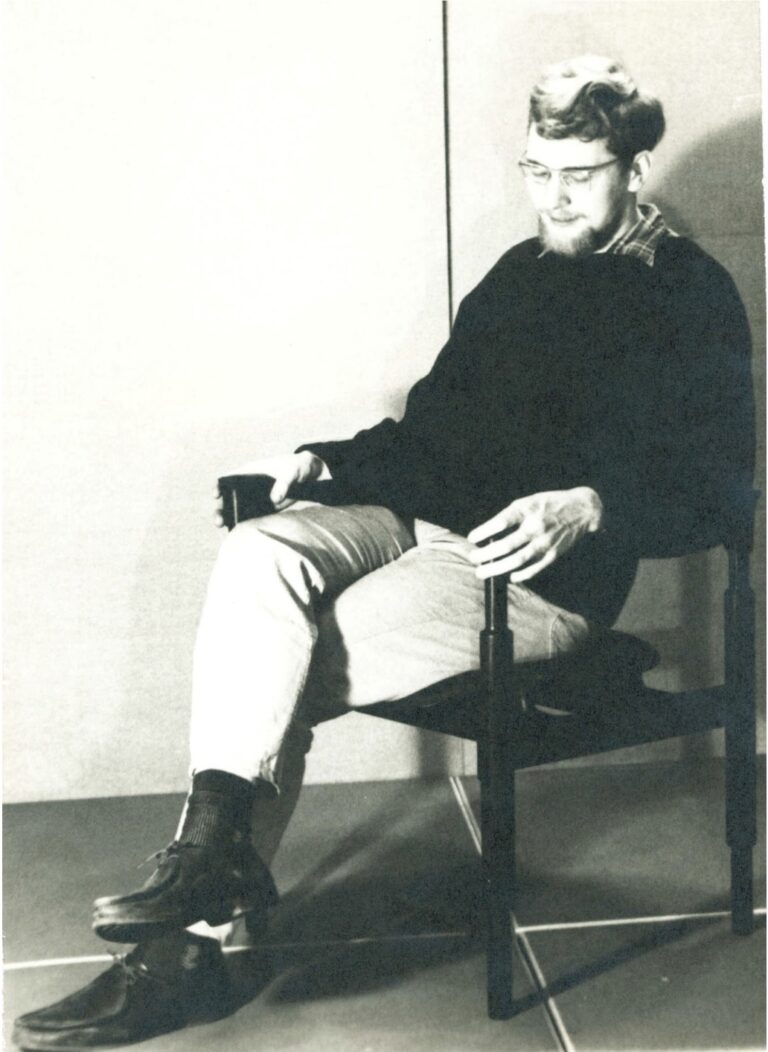
“When I design furniture, I perceive it as a mission to bring a decorative element to the functionalist style with a high anatomic comfort”
Aage Egeriis 1968
Aage Egeriis and his vision when he designed
Quote: Aage Egeriis 1968.
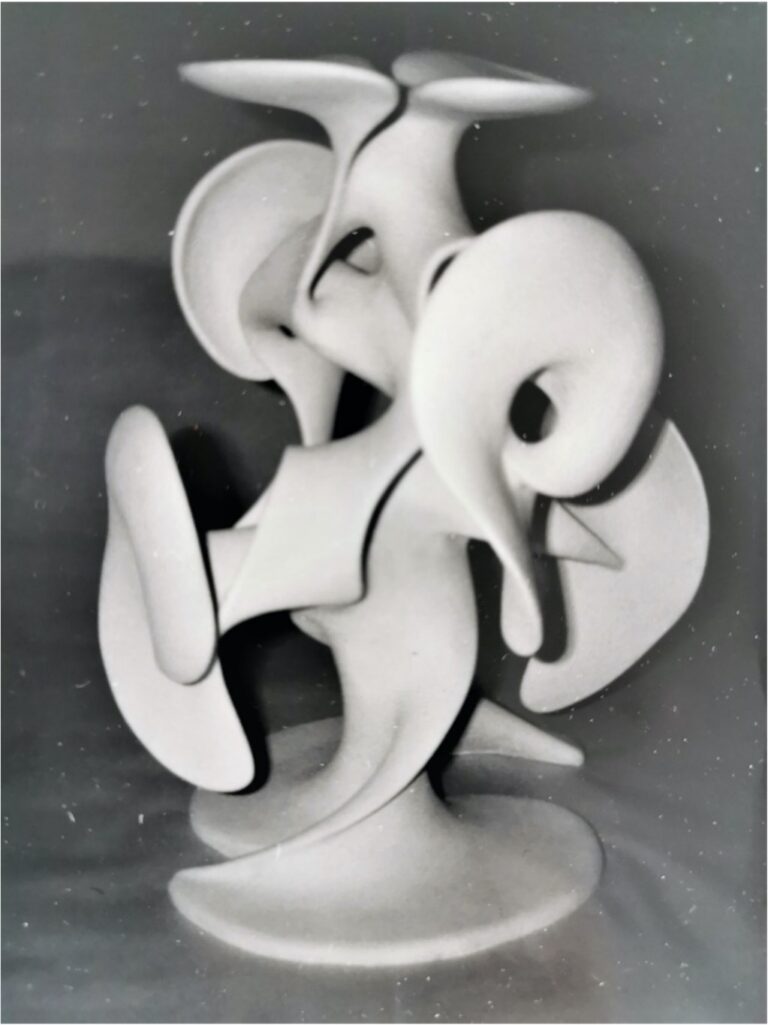
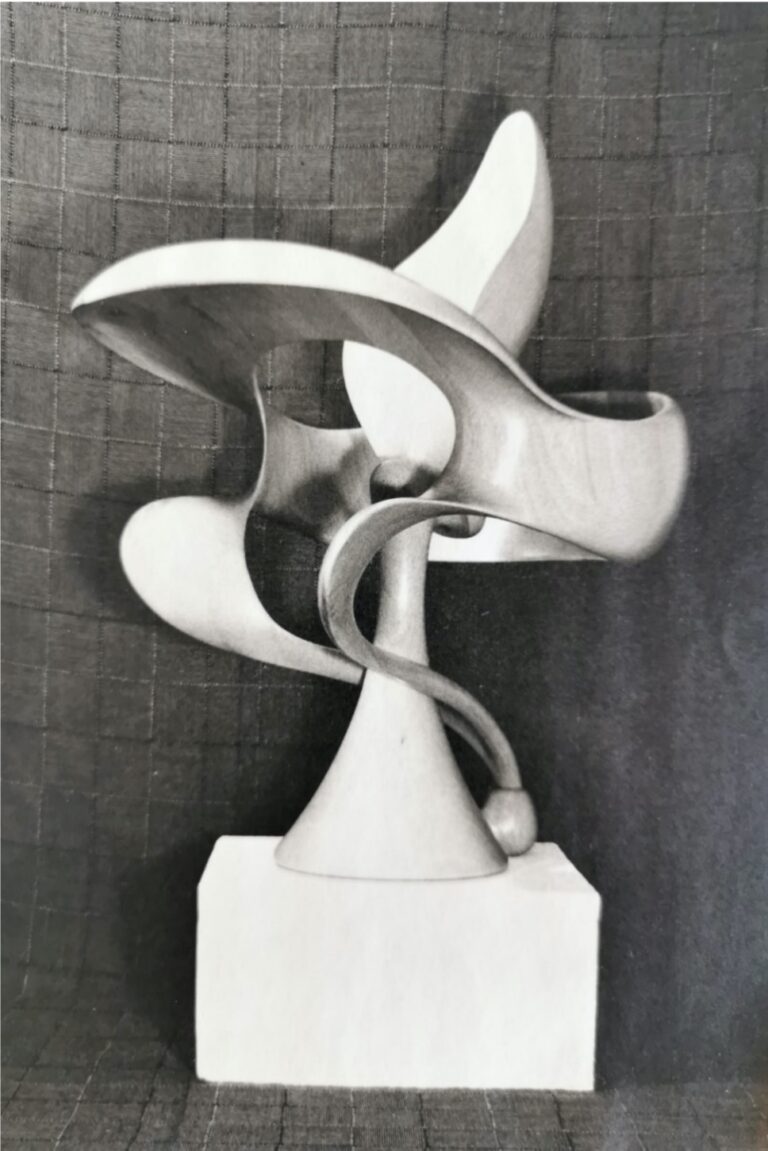
“Whether I work with furniture or sculptures, my vision is that I strive for it to look great in its entirety. And while I work, I have a fascination that no matter where I make a cross-section through the subject, I want a beautiful organic form to continue to emerge.
So no matter what angle I observe an object from, I only strive to make continuous curves without straight lines, so that everything ends in organic forms that together create a whole that in its simplicity rests in itself”
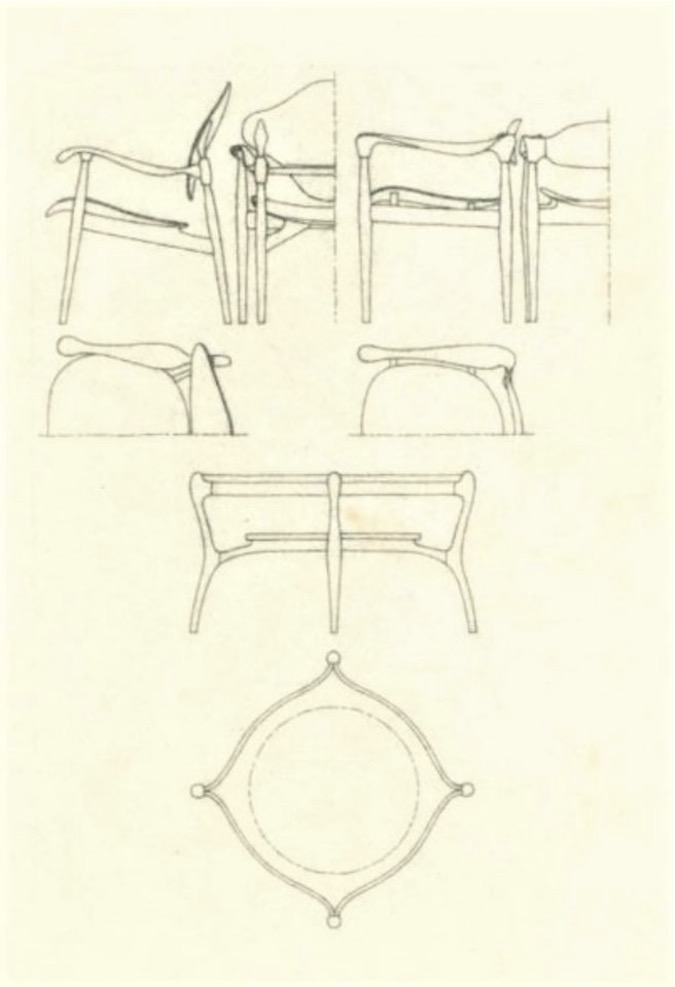
The Orchid Chair
Arne Jakobsen and Charles Eames and many of the great furniture architects of the time were also a great source of inspiration for Aage Egeriis’ designs, but the overarching inspiration of all was nature.
Organic inspiration
Aage Egeriis’ own words 1968.
“By observing nature’s open basic shapes in leaves, flowers, mussel and snail shells, etc., you will see that these shapes follow very definite laws of pressure and tension, so that a hollow in one place automatically finds equilibrium by creating a hollow in another place.
In a whole shape, such as a flower, you see the static transmission of this system of hollows following the chosen functionality of the flower, thus maintaining design and decoration. Basic natural shapes form a whole in all my furniture”
Aage Egeriis - Timeline
1942 Aage Egeriis was born on the fourth of April on the island of Samsø in Denmark.
1955–61 Apprenticeship as a cabinetmaker. Bronze medal certificate of completed apprenticeship.
1963-66 Furniture production school (Møbelhøjskolen) under the School of Fine Arts in Ahlefeldtsgade, Copenhagen.
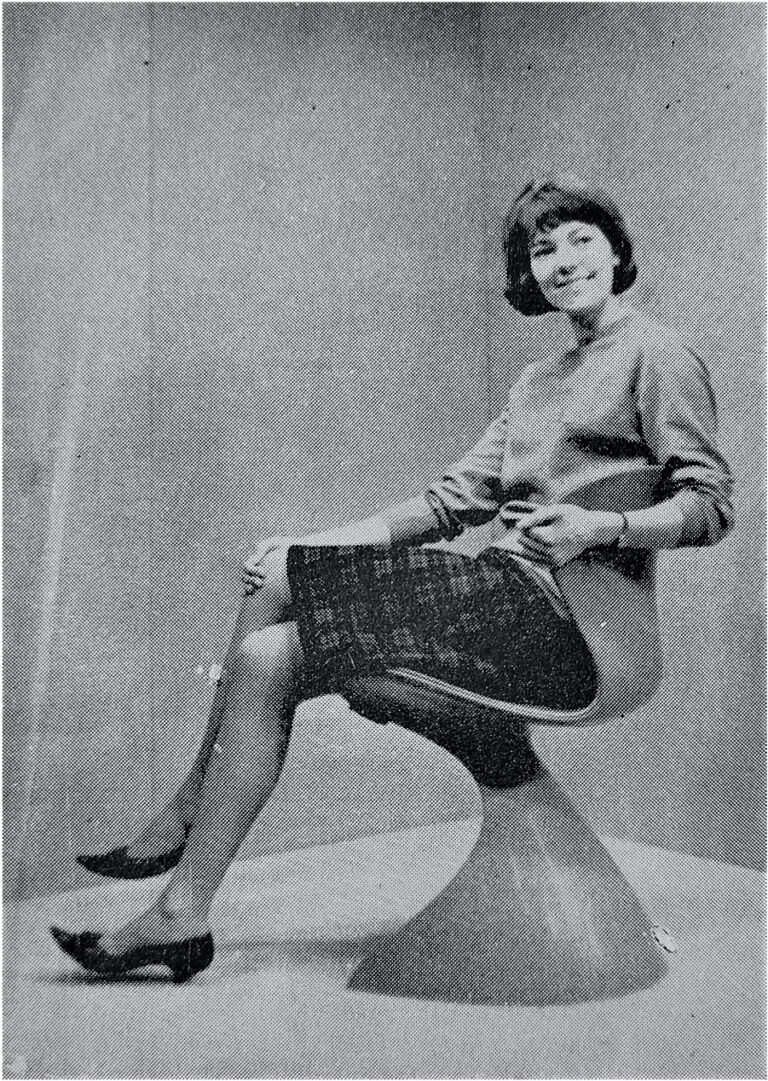
Aage Egeriis received two prizes during his training at the furniture school in Copenhagen: A first prize in the international furniture competition in Cantu Italy, for a dining chair which was the first in the world to have been made entirely of fibreglass, and the year before that, in 1964, a fourth prize in the Finerkompagniet furniture competition for a coffee table.
The picture: Award-winning chair in fiberglass. Won international 1st prize Cantu in Italy 1965.
In Finn Juhls design office
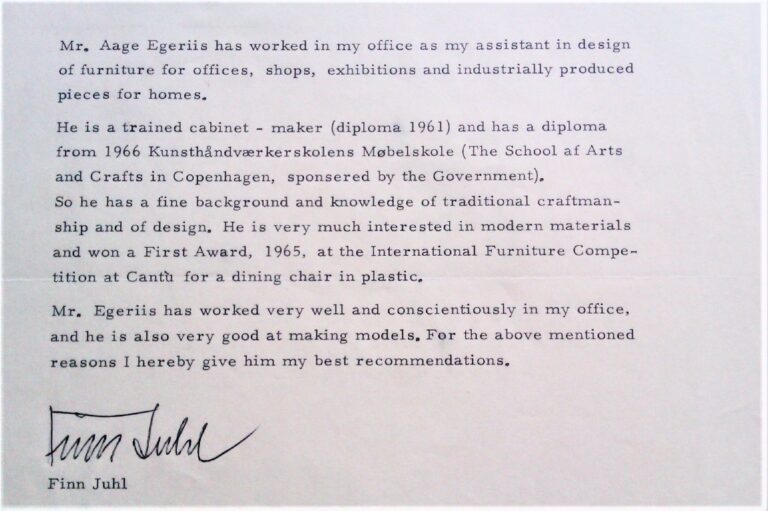
From 1966 to 67 Aage Egeriis was employed as an architect at the Finn Juhl design office in Gentofte in Copenhagen.
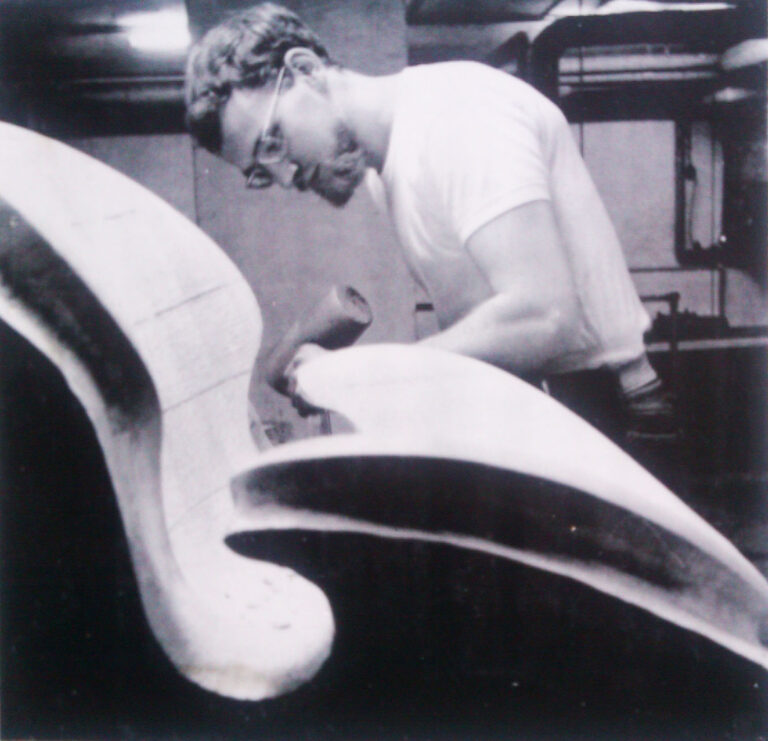
Finn Juhl was a great inspiration as well as a mentor for Aage Egeriis in this period. During his time Aage Egeriis found his own form language whilst utilizing the combination of furniture design, arts and handicraft which was Finn Juhl’s focal point when he created his furniture.
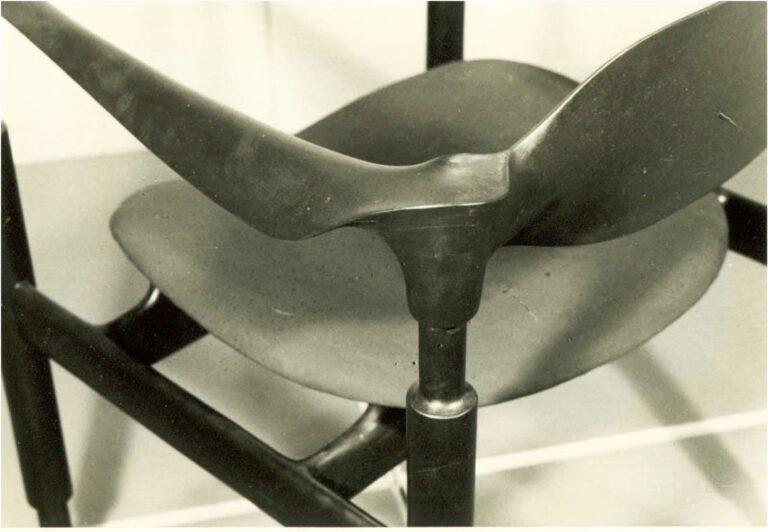
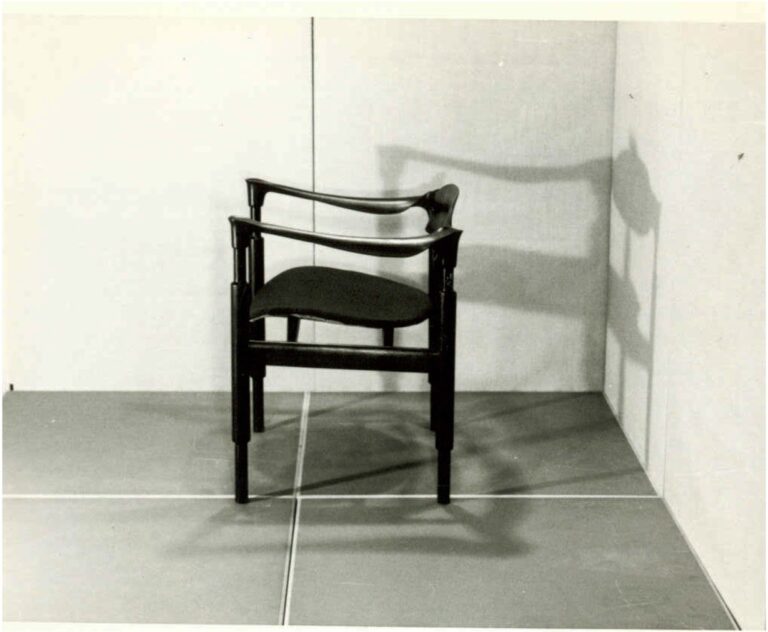
Classic wood chairs 1964
Designed by Aage Egeriis. Inspired by Finn Juhl.
Cooperation with manufacturer Poul Cadovius
From 1968 until his death in 1971, Aage Egeriis initiated a cooperation with manufacturer Poul Cadovius at France & Son in Denmark.
The Orchid and the Lily chairs are introduced to the public in 1968 and the furniture was exported to many countries like Germany, England, Sweden, and also the United States.
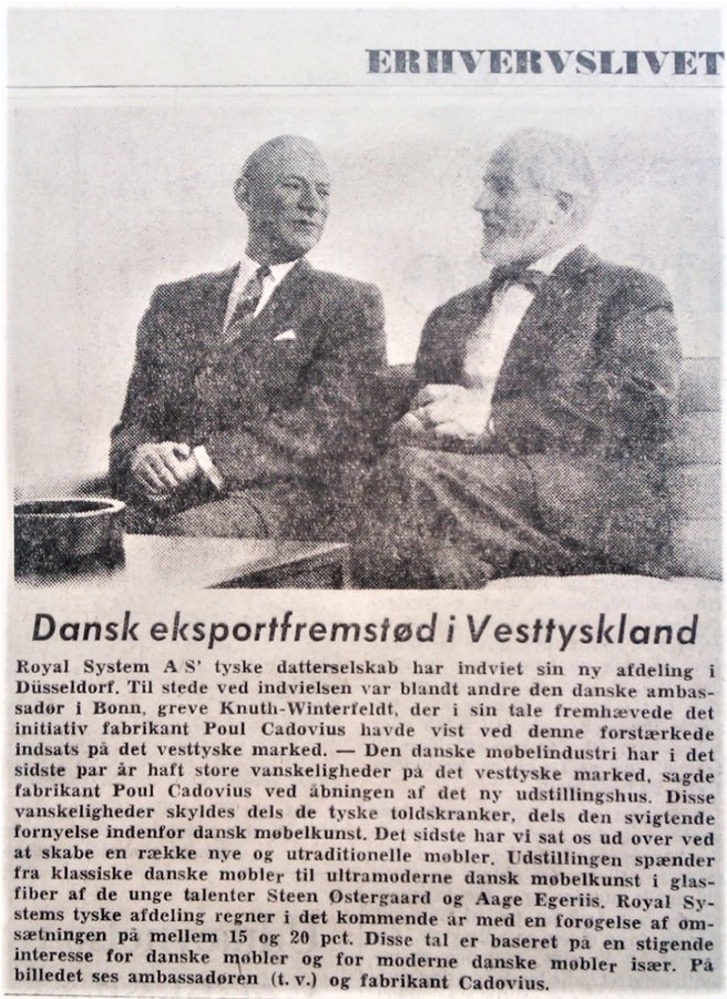
The picture: The picture shows Poul Cadovius (to the right) with the Danish Ambassador Kunth Winterfeldt. Together at the inauguration of a new exhibition hall in Dusseldorf in 1969.
The journey over 3 important time periods
In our rethinking of Aage Egeriis furniture with new materials and colours, his furniture art is now also recreated with three exciting time periods:
1) The epoch-making great golden age for Danish Modern of the old Danish craft;
2) The industrialization of furniture production with unimaginable possibilities in design with materials such as plastic and fibreglass;
3) And our time with newly developed and beautiful materials where the furniture is made on advanced robot technologies observing today’s ethical values of a sustainable economy.
These three time periods bring together the furniture in a design that goes all the way back to Aage Egeriis and his time as a cabinetmaker in 1955, through industrialization and up to our time.
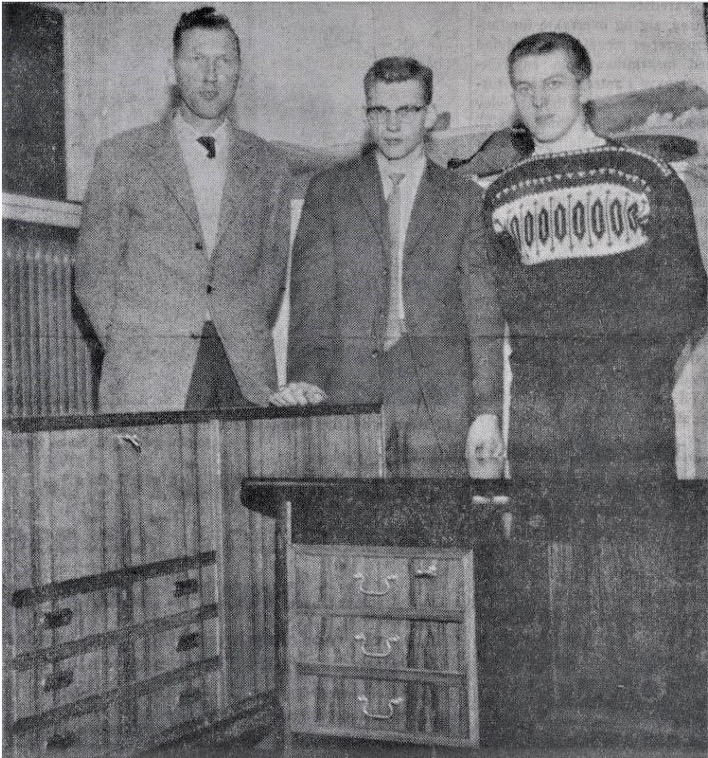
The picture: Aage Egeriis is seen in the middle of the picture as a finished cabinetmaker with a bronze medal.
The person behind the architect Aage Egeriis
Aage Egeriis died at the age of 29 and get one son. He was daptized and married in the public church of Denmark and in 1962 he served his military service as a medical orderly in the infirmary.
What left behind
Aage Egeriis created a large collection of organic furniture, some of which never made it into production. To protect new ideas, designs and the future production, I request that you sign the confidential agreement before I introduce you to the full portfolio. The NDA can be found on the page Information for furniture manufacturers – Egeriis Furniture
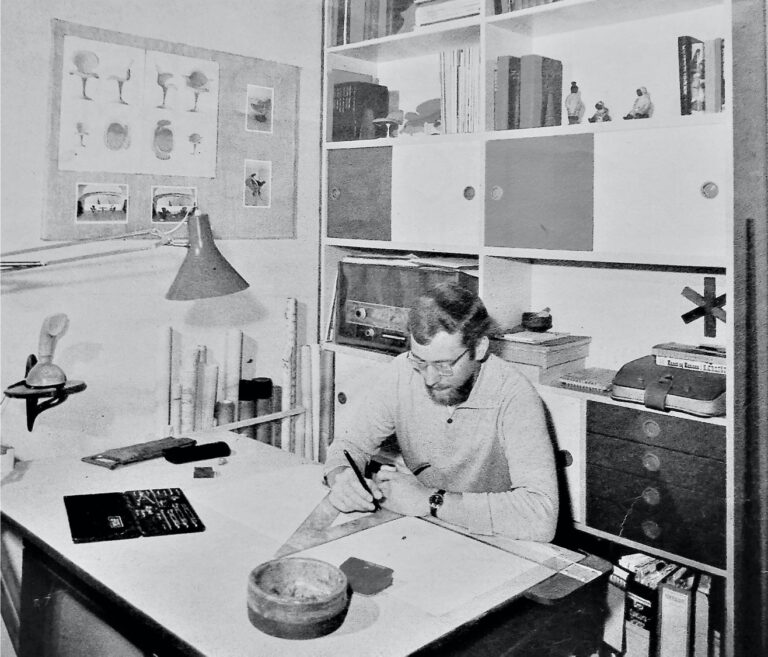
The picture: Aage Egeriis at his drawing board at his residence in Rødovre in Copenhagen 1968.
Aage Egeriis and his dream for the future
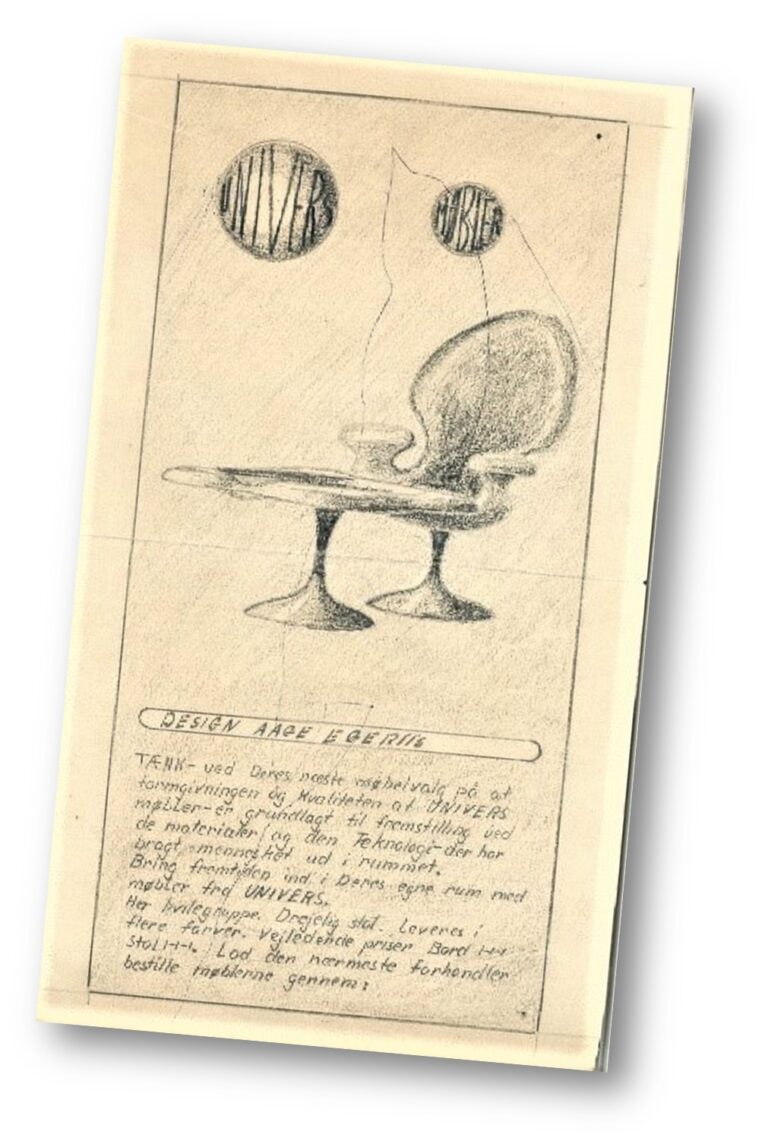
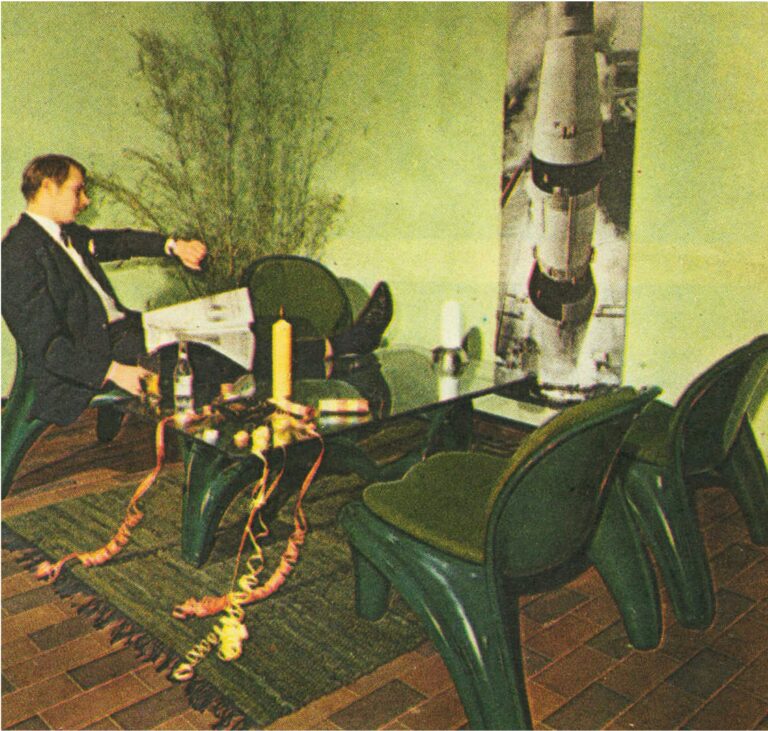
He always made an effort to put a virtue into expressing his own independent form language, and apart from finding inspiration in the great furniture architects of the 50s, arts, handicrafts, and in nature, he was also very preoccupied in the future, outer space and science fiction stories.
On the sketch to the right, Aage Egeriis writes about his own dream for the furniture in the future. His words are:
“Imagine that your next choice of furniture is a form language and a quality which is founded on the production of the materials and technology that have brought man into space“
“I hope that my love for Aage Egeriis’ furniture and designs will bring them on a further journey into the future and create joy for many generations.
Whether Aage Egeriis dreams about his furniture in the future will be made with materials that have brought man into space will become a reality, only time will tell, but I will make sure that Aage Egeriis’ visions and his organic beauty and simplicity in furniture will live on“