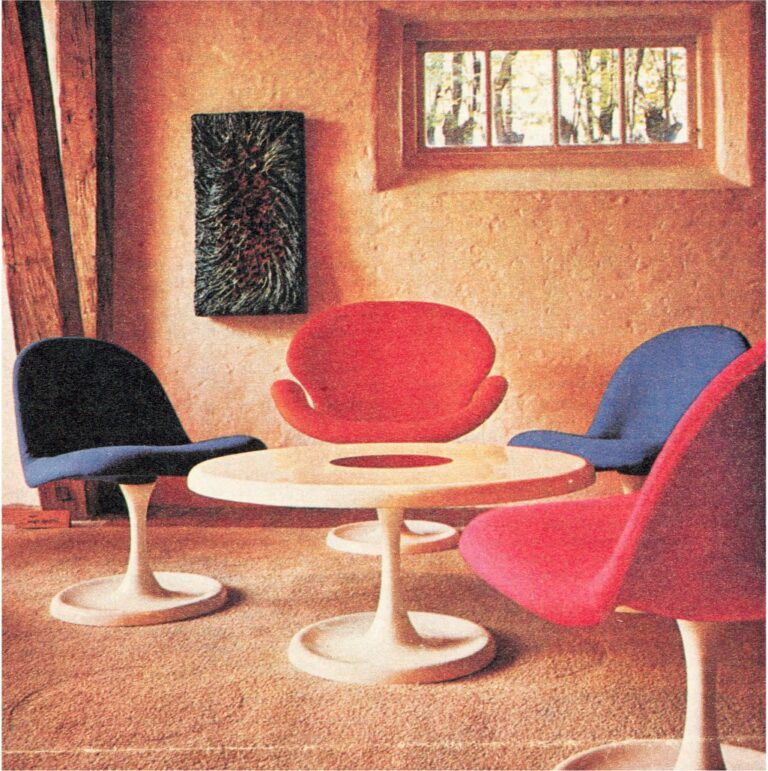
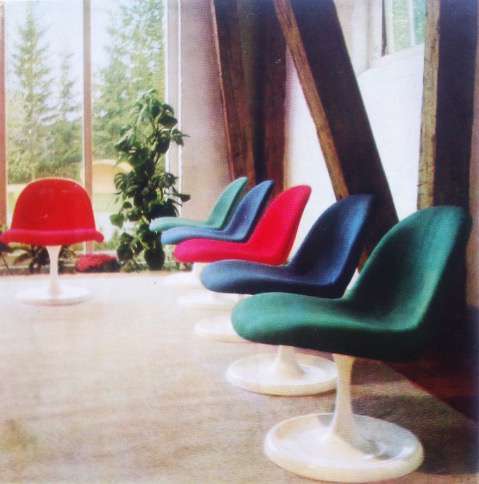
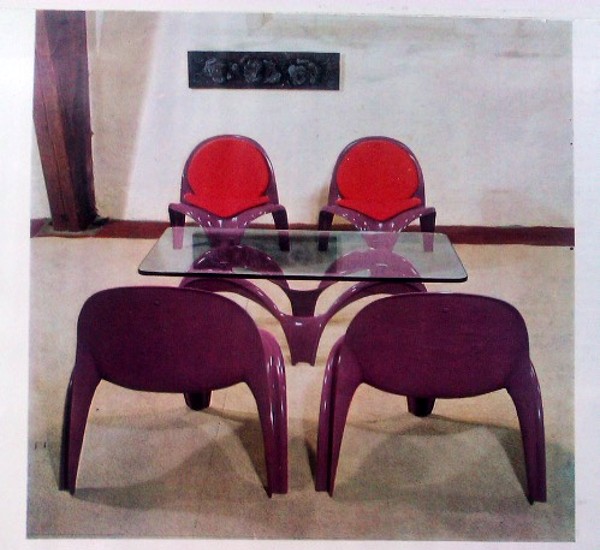
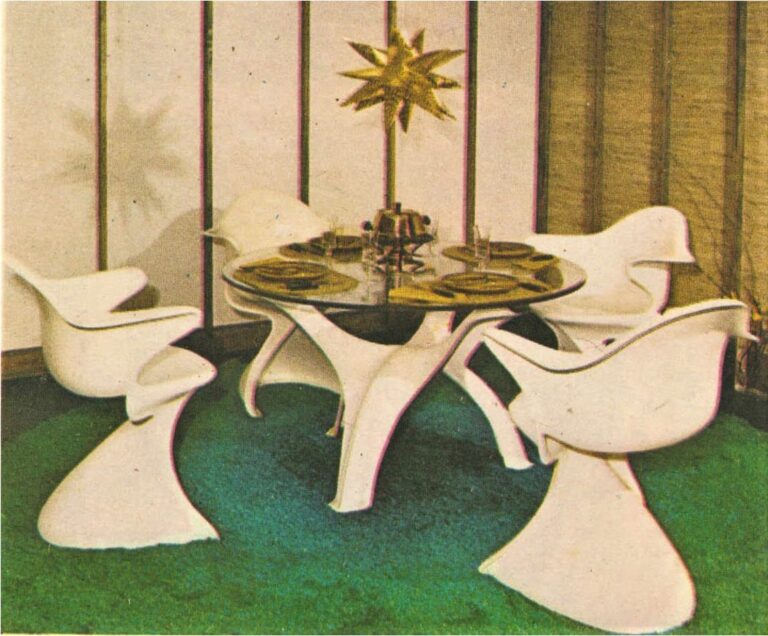
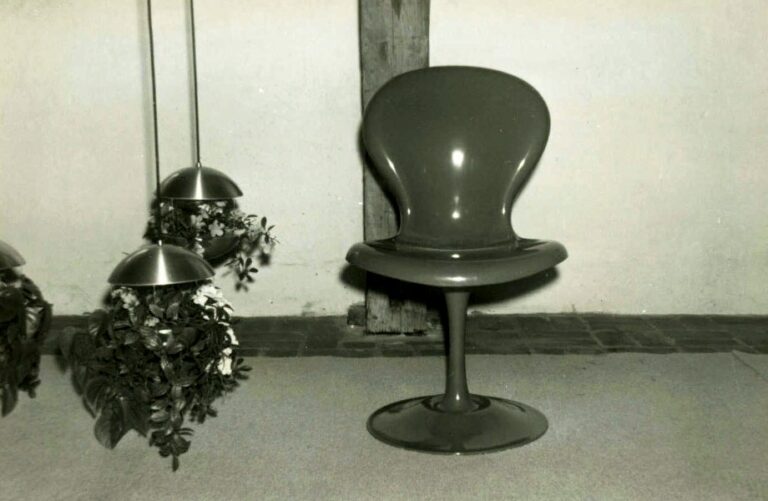
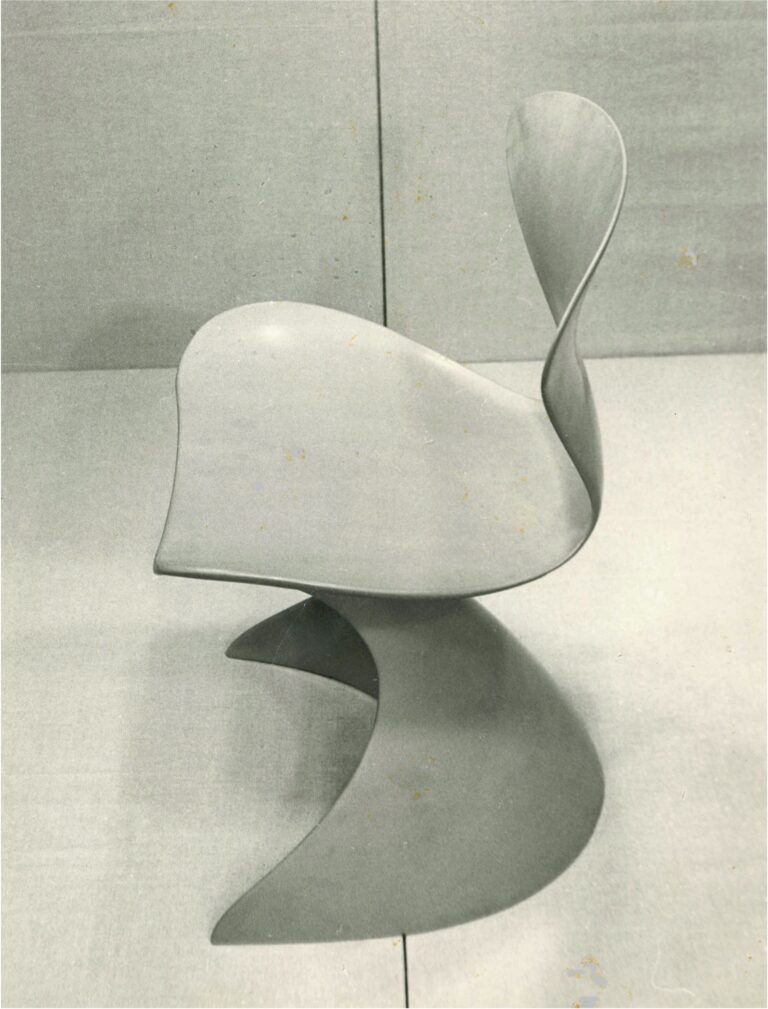
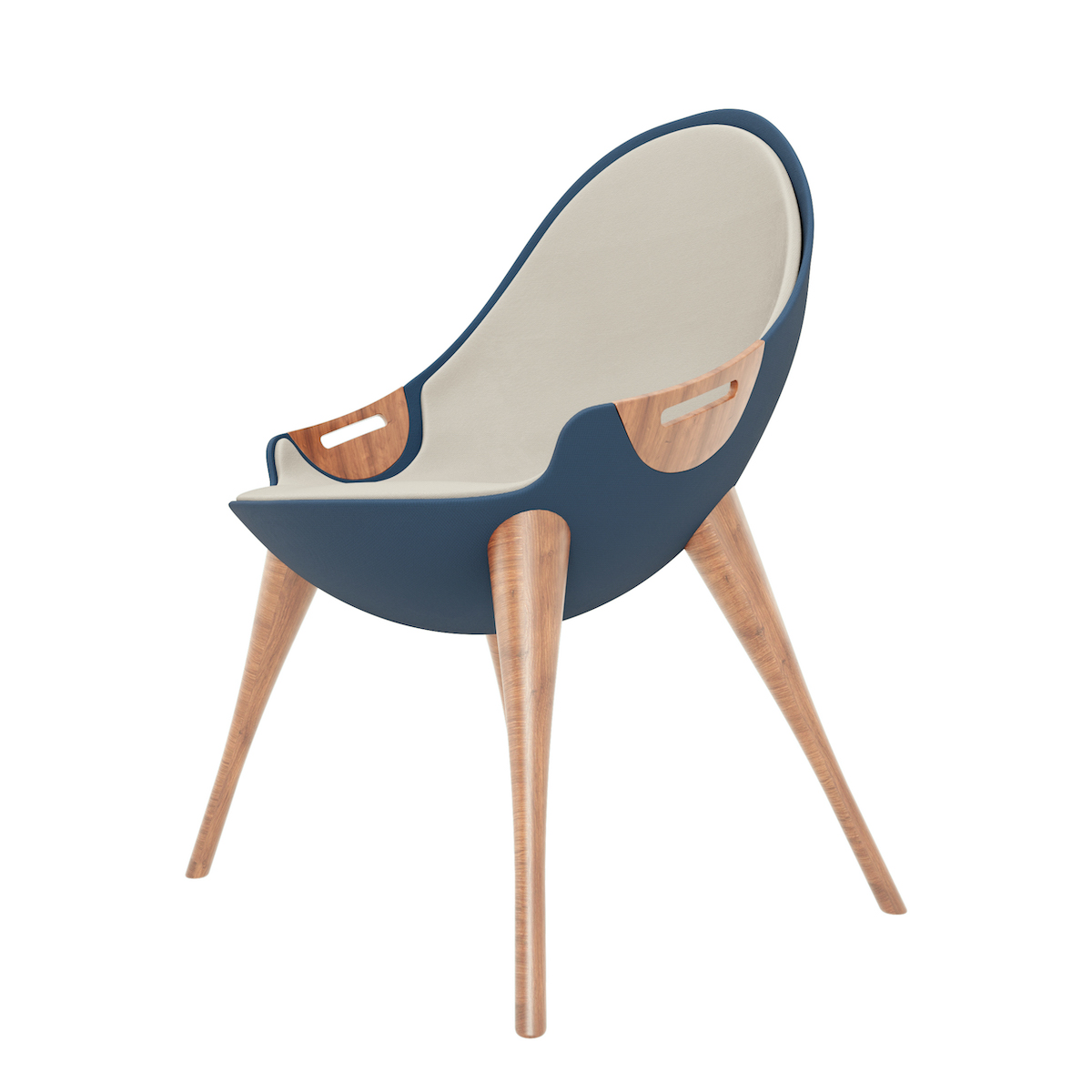
The three-legged chair in glassfiber-reinforced polyester. This chair was also produced in white.
Name unknown
Chairs by Aage Egeriis inspired by the The award-winning chair which won international 1st prize in Cantu.
The award-winning chair can be seen as a redesign under the section Designs by Egeriis and further down this page.
Name unknown
The chair was also produced with armrests and steel legs.
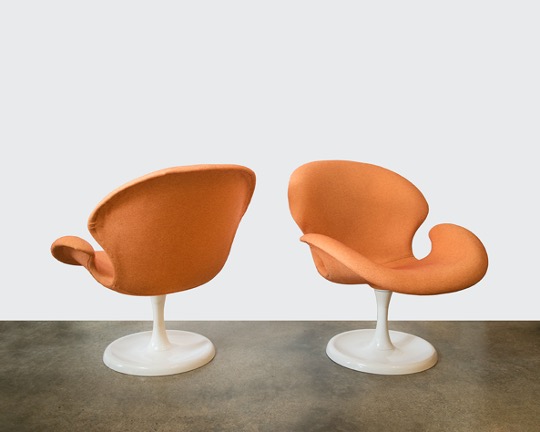
Orchid Chairs - Auction in Houston
Two Orchid Chairs with textile seating from 1968 was in 2017, sold on a auction in Houston, USA, for the amount of 3.600 US$ (around 25.000 Danish kroner).
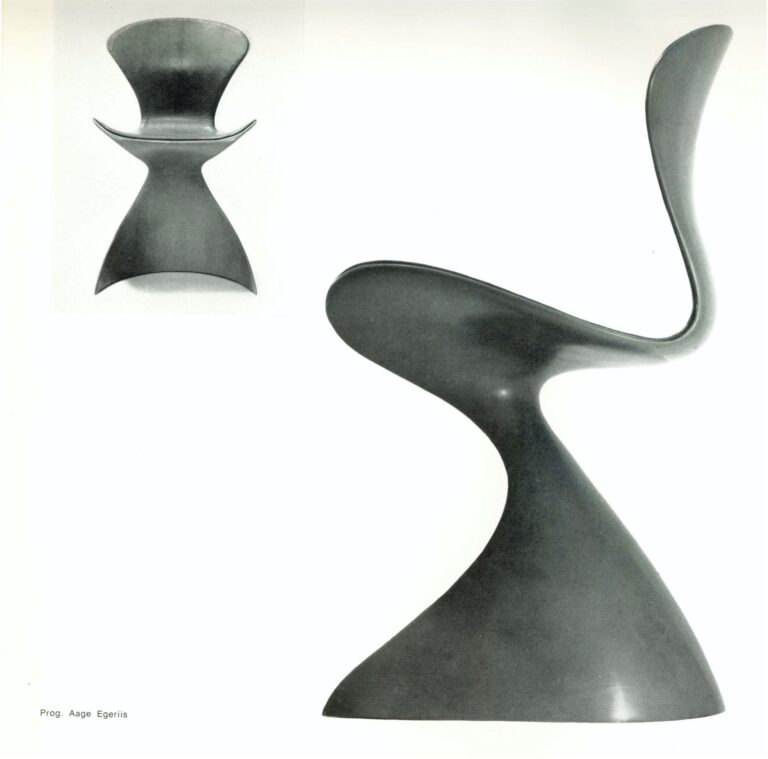
Won international 1st prize Cantu in Italy 1965
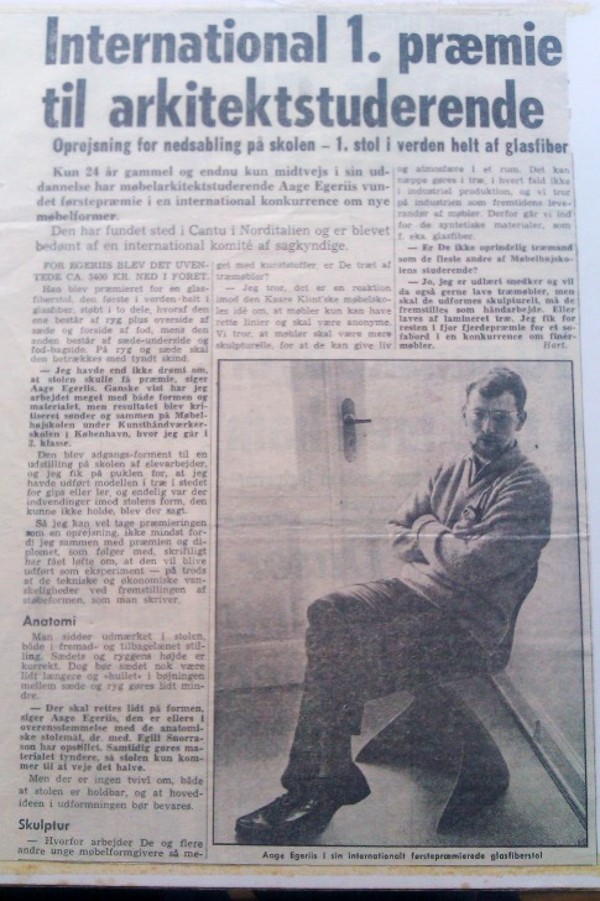
Articles in Danish newspapers about the 1st prize Cantu in Italy 1965
Here you see the award-winning chair viewed from above
The chair won the prize as a dining chair, but was later used by the architect as an office chair.
1942-55 Born on the fourth of April in Tranebjerg parish on the island of Samsø. 7 years of primary school at Brundby school.
1955–61 Apprenticeship as a cabinetmaker with master cabinetmaker Henning Thomsen in Tranebjerg. Bronze medal certificate of completed apprenticeship.
1961-63 Military service as a medical orderly in the infirmary.
1963-66 Furniture production school (Møbelhøjskolen) under the School of Fine Arts in Ahlefeldtsgade, Copenhagen.
Awarded two prizes during his training.
4th prize for a coffee table in the Finerkompagniet furniture competition 1964.
1st prize in the international furniture competition in Cantu, Italy in 1965.
1966-67 Employed at the drawing office of architect MAA Finn Juhl.
1967-68 Has the son Cbastian Victor Egeriis Johannsen with Else Cederstrøm.
Works four months as a postal assistant in the Rødovre post office.
1968-69 Cooperation with manufacturer Poul Cadovius at France & Son.
The Orchid and the Lily chairs are introduced to the public in 1968.
1971 Dies 29 years old.
The untold story
When Aage Egeriis designed his final pieces of furniture, he had already developed visions for future designs — furniture that would stand free from its sources of inspiration and evolve into a distinct design language of its own.
With roots reaching all the way back to Aage Egeriis’ design story in 1955, my goal as his son is to unfold and continue this story — through carefully redesigned pieces from his original work as well as entirely new furniture.
Together, these designs form the next chapter of the story under the Egeriis Collection brand.